


Gold price (XAU/USD) opens over 1% lower to near $4,445.00 on Monday, as oil prices have rallied further on fears of further widening of conflicts in the Middle East. WTI Oil price is up almost 3% above $102.50 in the opening trade, increasing fears of higher inflation expectations globally.
Theoretically, accelerating global inflation expectations force central banks to hold interest rates steady for a longer term or tighten monetary conditions, which diminishes demand for non-yielding assets, such as Gold.
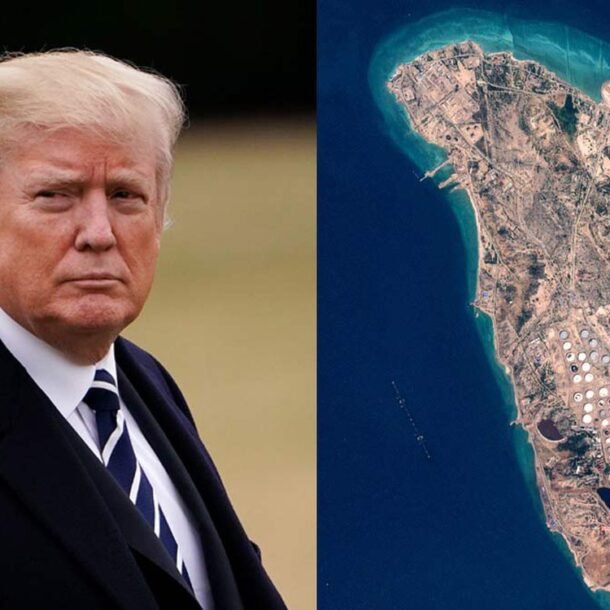
Fears of further escalation in the Middle East war are prompted by the expectation that the United States (US) is considering a ground invasion of Iran. On Thursday, a report from the Wall Street Journal (WSJ) showed that the US Pentagon will send 10,000 additional troops to Iran.
In response, Iran’s Brigadier General Ebrahim Zolfaqari warned on the Iranian state TV that “US troops will be good food for sharks of the Persian Gulf”.
Meanwhile, a report from Reuters has shown that US President Donald Trump remains confident, while interviewed by the Financial Times (FT), that Washington could reach a deal with Iran soon. “Indirect talks via emissaries progressing well,” Trump said, and added, “A deal could be made fairly quickly.”
Gold technical analysis
-1774830293940-1774830293943.png&w=1536&q=95)
XAU/USD trades lower at around $4,445 in the opening trade. The near-term bias is bearish, with price extending below the 20-day Exponential Moving Average (EMA) that now tracks well above the market and acts as dynamic resistance around $4,735. The sequence of lower closes from the $5,300 area underscores a downside trend after losing the prior consolidation band around $4,900.
The 14-day Relative Strength Index (RSI) continues to stay inside the 20.00-40.00 range, indicating persistent selling pressure while leaving room for further downside before momentum exhausts.
Immediate resistance emerges at $4,736, where the 20-day EMA converges with the recent breakdown reference, followed by $4,915 as the next upside barrier if a corrective bounce develops. A daily close back above $4,915 would weaken the current bearish structure and open the path toward $5,080. On the downside, initial support is located at the March 24 low near $4,307, with a break below exposing the next bearish objective at the March 23 low around $4,100. As long as price holds beneath the $4,736–4,915 resistance band, sellers retain control of the short-term outlook.
(The technical analysis of this story was written with the help of an AI tool.)
Gold FAQs
Gold has played a key role in human’s history as it has been widely used as a store of value and medium of exchange. Currently, apart from its shine and usage for jewelry, the precious metal is widely seen as a safe-haven asset, meaning that it is considered a good investment during turbulent times. Gold is also widely seen as a hedge against inflation and against depreciating currencies as it doesn’t rely on any specific issuer or government.
Central banks are the biggest Gold holders. In their aim to support their currencies in turbulent times, central banks tend to diversify their reserves and buy Gold to improve the perceived strength of the economy and the currency. High Gold reserves can be a source of trust for a country’s solvency. Central banks added 1,136 tonnes of Gold worth around $70 billion to their reserves in 2022, according to data from the World Gold Council. This is the highest yearly purchase since records began. Central banks from emerging economies such as China, India and Turkey are quickly increasing their Gold reserves.
Gold has an inverse correlation with the US Dollar and US Treasuries, which are both major reserve and safe-haven assets. When the Dollar depreciates, Gold tends to rise, enabling investors and central banks to diversify their assets in turbulent times. Gold is also inversely correlated with risk assets. A rally in the stock market tends to weaken Gold price, while sell-offs in riskier markets tend to favor the precious metal.
The price can move due to a wide range of factors. Geopolitical instability or fears of a deep recession can quickly make Gold price escalate due to its safe-haven status. As a yield-less asset, Gold tends to rise with lower interest rates, while higher cost of money usually weighs down on the yellow metal. Still, most moves depend on how the US Dollar (USD) behaves as the asset is priced in dollars (XAU/USD). A strong Dollar tends to keep the price of Gold controlled, whereas a weaker Dollar is likely to push Gold prices up.